Dimensions (L x W x H)
98 x 48 x 64 in (249 x 122 x 163 cm)
Product Weight
590 lb (268 kg)
Product Code
PL-RVSQ


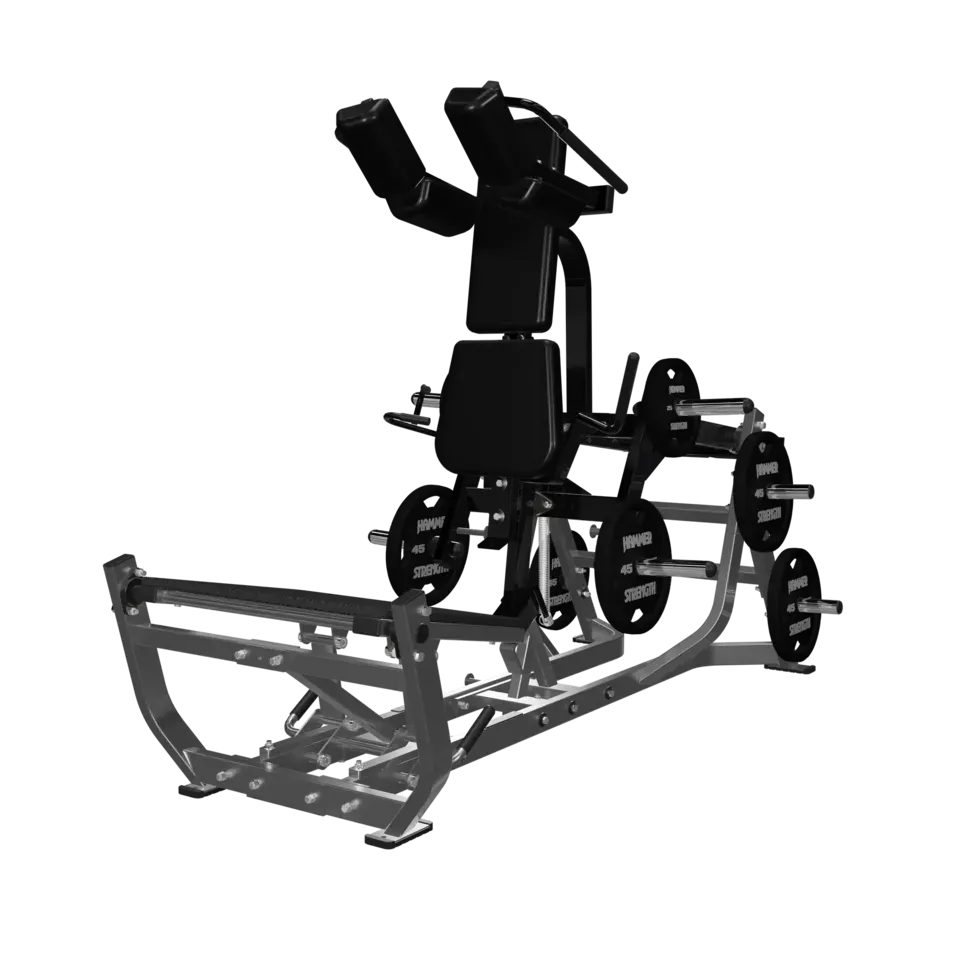
The Reverse V-Squat machine expands what one machine can do. Built on the original V-Squat, it adds the range today’s training demands. Athletes can load the traditional V-Squat or flip to a reverse, front-squat position that hits the movement from a new angle.
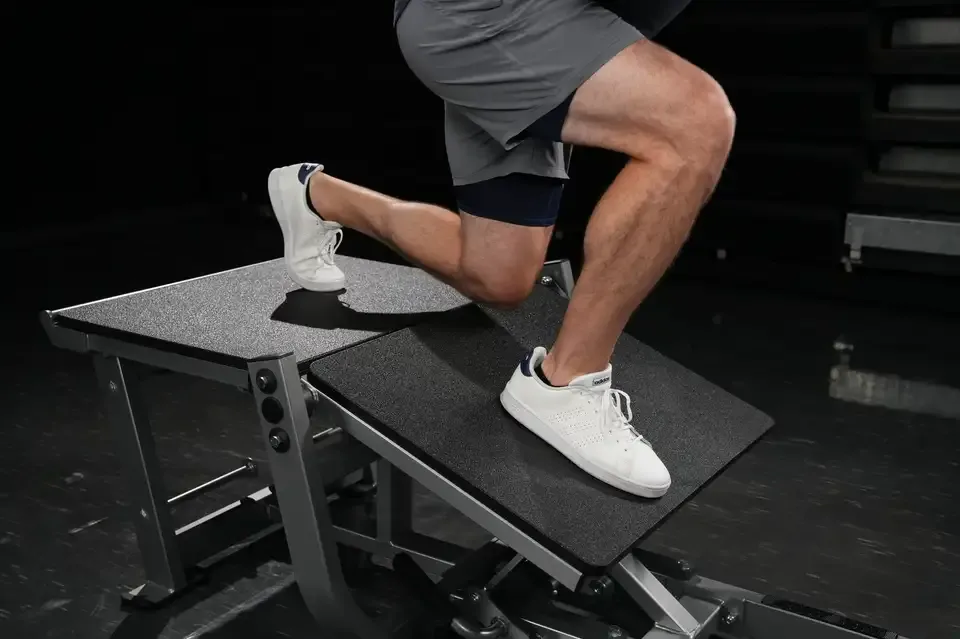
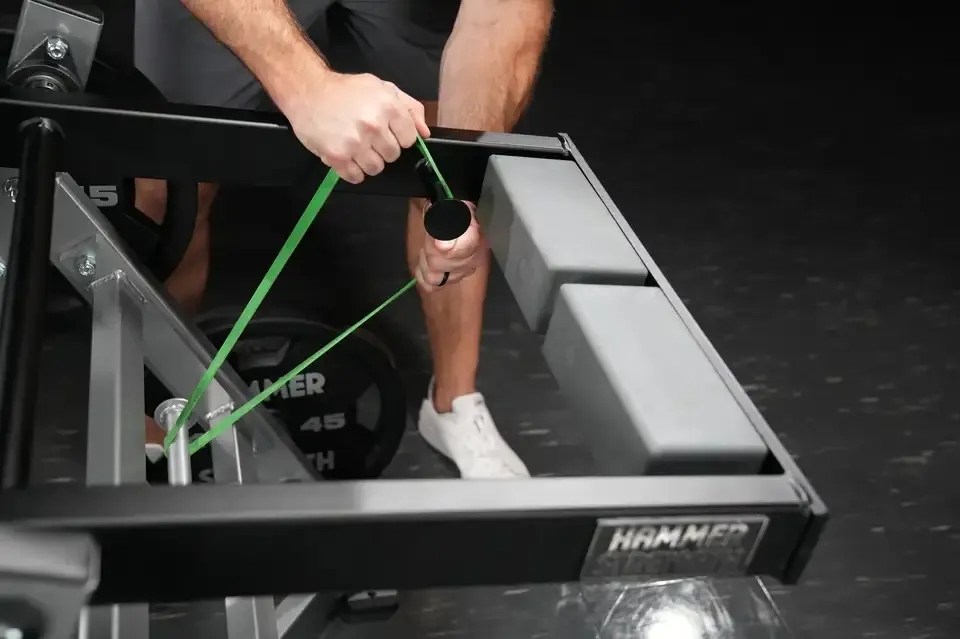
An adjustable foot platform sets each athlete’s press angle, while dual band pegs add assisted or resisted training, and an optional platform extension opens single-leg and band training options. One plate loaded squat machine, two distinct movements, in a single footprint.
Dimensions (L x W x H): 98 x 48 x 64 in (249 x 122 x 163 cm)
Product Weight: 590 lb (268 kg)
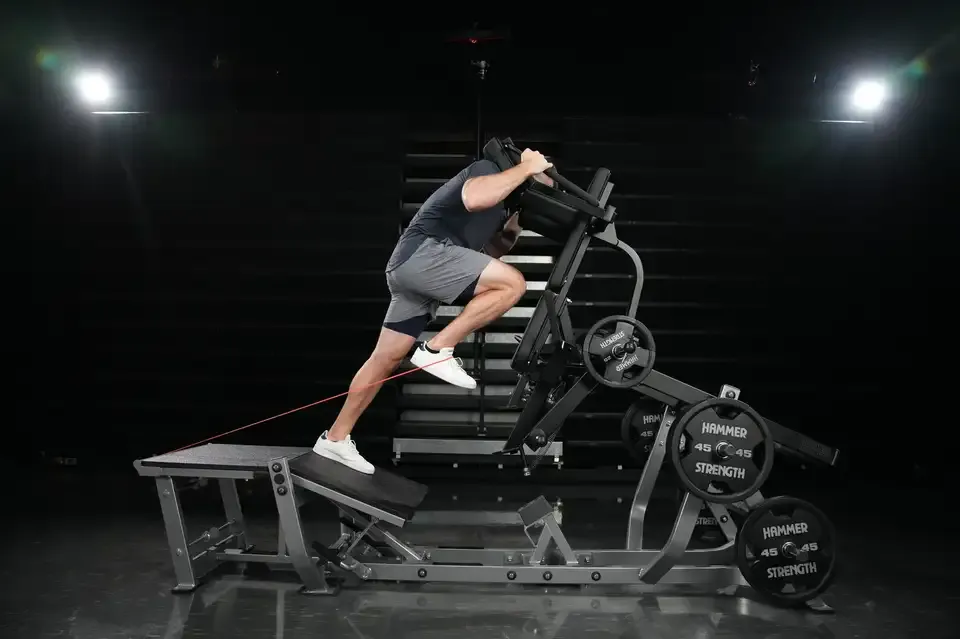
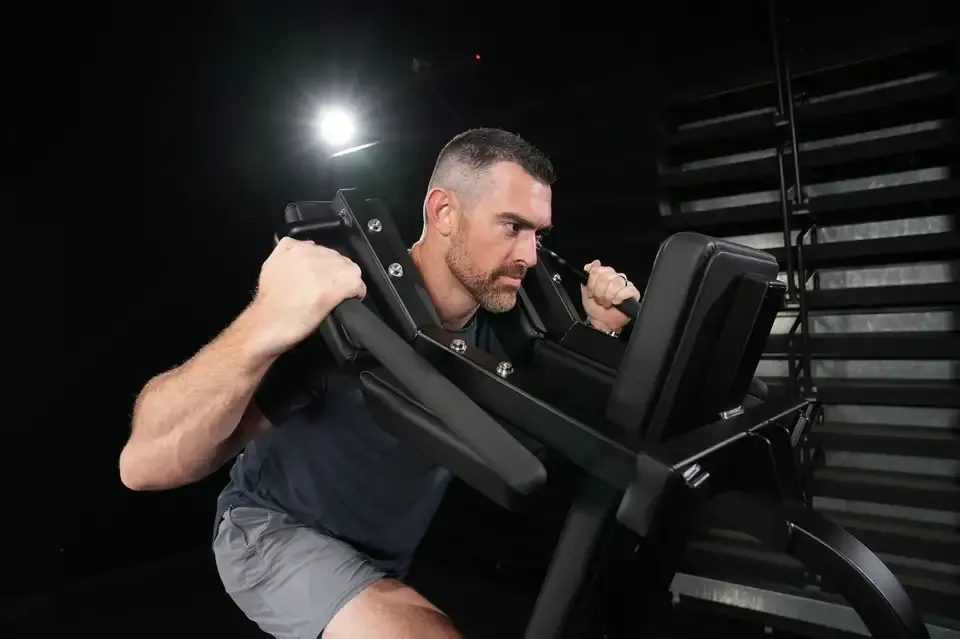
The Hammer Strength Reverse V-Squat is a plate loaded squat machine that trains two patterns in one frame: the traditional V-Squat and a reverse, front-squat variation. It features an adjustable foot platform, dual assisting/resisting band pegs, and an optional extension for split squats and single-leg work, making it a flexible leg machine for a full roster of athletes.
A traditional V-Squat is a single-direction machine. The Reverse V-Squat keeps that proven pattern and adds a reverse position for a front-squat variation, an adjustable platform to dial in press angle, dual band pegs for assisted or resisted training, and an optional extension for single-leg work. It’s the same foundation with significantly more programming range.
The V-Squat works the quadriceps, glutes (including the gluteus maximus), hamstrings, and adductors, with the trunk stabilizing throughout. The traditional position loads the posterior chain and glutes, while the reverse position shifts emphasis toward the quads — so squats muscles worked span the full lower body across two patterns.
No. A hack squat machine loads the quads along a fixed vertical track. The V-Squat follows an angled, arcing path closer to a free squat, letting athletes train their natural mechanics. The Reverse V-Squat goes further than a standard or reverse hack squat by offering both a forward and a reverse squat pattern in one machine.
A leg press is a horizontal push, a hack squat and pendulum squat are fixed vertical patterns. The Reverse V-Squat offers two distinct squat variations — forward and reverse — plus band training, an adjustable platform, and optional single-leg work. For facilities wanting one plate loaded squat machine that covers the most lower-body training ground, it's one of the most versatile options in the category.
Load plates evenly on both arms, set the adjustable foot platform to your stance and variation, position your shoulders under the pads, and press through the platform. For the reverse V-Squat, face into the machine and drop the platform to its lowest setting for a more vertical, explosive press out of the bottom.
The optional platform extension adds surface area for split squats, single-leg work, and band setups the standard platform doesn't allow. It's built for coaches and programs that prioritize unilateral leg development. It's an optional upgrade that not every facility needs, but it's a meaningful addition for programs prioritizing unilateral lower-body programs.
Yes. Dual assisting/resisting band pegs let you add accommodating resistance or assistance to any set, and the optional extension opens up for split squats and single-leg work. Together they make the Reverse V-Squat one machine that supports unilateral training, power development, and movement coaching for every level.
The Reverse V-Squat replaces several pieces with one. The Reverse V-Squat delivers two squat patterns plus single-leg and band training in a single footprint, so operators get more lower-body training per square foot. Built to the Hammer Strength standard, it stands up to high-traffic commercial use and programs for athletes at every level.